Furnace Installation & Replacement
Systems Sized for Decades of Performance
Furnace Installation & Replacement in Monroe for system upgrades, equipment failures, and new construction heating projects
When a furnace reaches the end of its functional lifespan or fails beyond economical repair, replacement involves more than swapping one unit for another. Miller's Nu Tech evaluates your home's heating demands, insulation levels, and ductwork capacity before recommending a specific furnace model, because undersized systems run constantly without reaching set temperatures while oversized units cycle too frequently and wear out components faster. Monroe winters require heating systems that maintain comfort during extended periods below freezing, and incorrect sizing leads to uneven temperatures, higher energy bills, and premature equipment failure.
Professional installation includes removing the old furnace, modifying gas lines or electrical connections as needed to meet current code, and testing airflow through existing ductwork to verify the new system receives adequate return air. High-efficiency gas furnaces extract more heat from each unit of fuel by using secondary heat exchangers and variable-speed blowers, which changes how the system vents combustion gases and circulates air compared to older single-stage models.
Arrange a system evaluation to review furnace options based on your home's current heating performance and long-term efficiency goals.
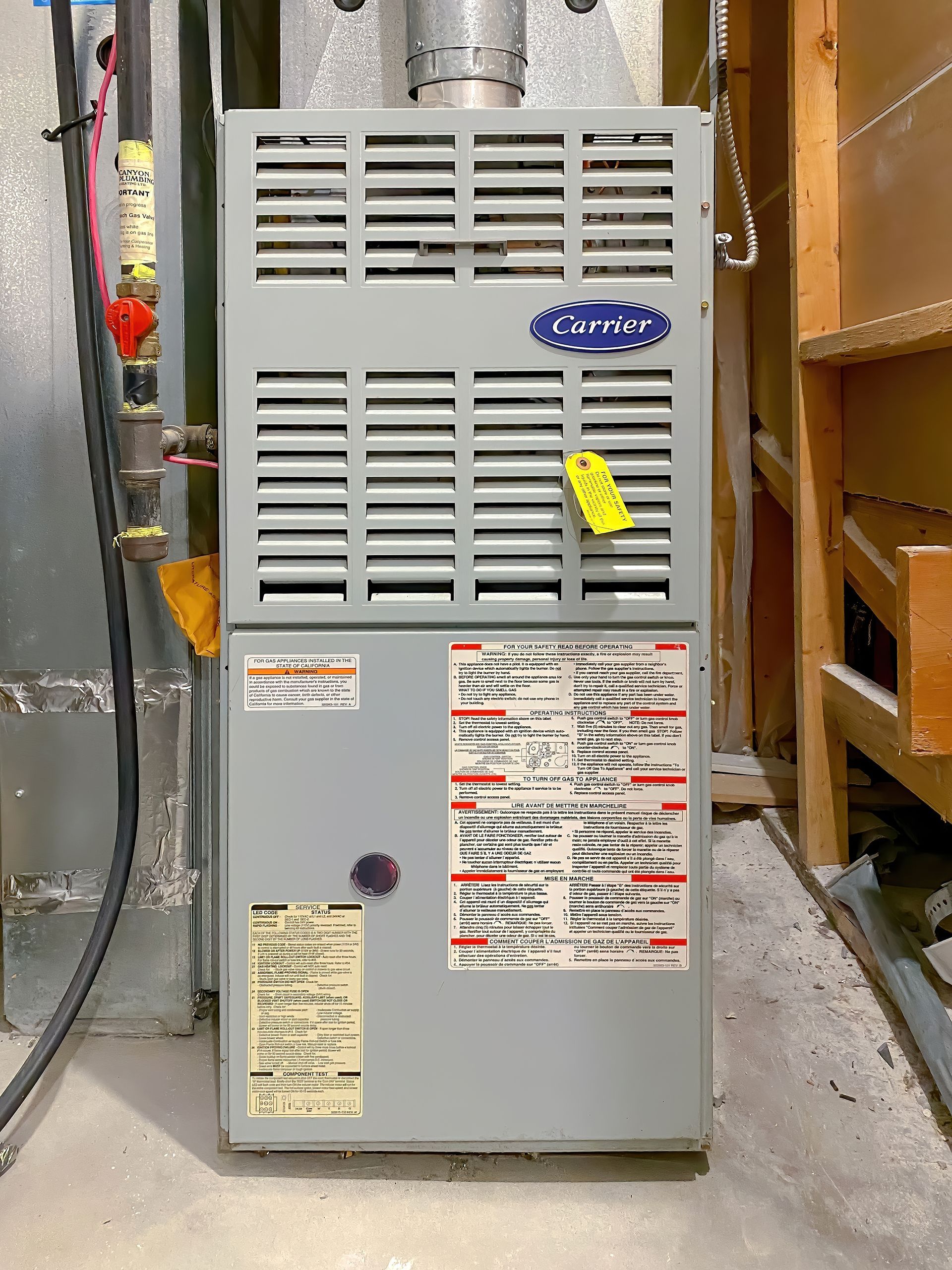
The installation process begins with load calculations that account for square footage, ceiling height, window area, and insulation quality to determine the correct furnace capacity measured in BTUs. Technicians then verify ductwork sizing, seal leaks that waste heated air, and confirm the new furnace's airflow requirements match what the existing duct system can deliver. Gas furnaces require proper venting through the roof or sidewall, and high-efficiency condensing models use PVC piping rather than metal flues because exhaust gases cool enough to produce condensation that must drain safely.
Once installation finishes, your home reaches set temperature faster without the extended run times older furnaces needed, and temperature variation between rooms decreases when airflow is balanced correctly during setup. Energy bills typically drop when replacing a furnace older than fifteen years with a high-efficiency model, especially if the old system was oversized or suffering from worn components that reduced combustion efficiency. You'll also notice quieter operation from variable-speed blowers that ramp up gradually instead of starting at full power every cycle.
The project timeline depends on whether ductwork modifications are needed, whether electrical service requires upgrading to handle new blower motors, and whether gas line sizing meets manufacturer specifications for the new furnace. Financing options may be available to help manage the upfront cost of replacement projects, and emergency heating support remains available for customers whose furnaces fail suddenly before a scheduled installation date.
Questions Before Starting Your Project
Homeowners preparing for furnace replacement often ask about system selection, installation timelines, and what changes they'll notice after the new equipment begins operating.
How do I know what size furnace my home actually needs?
Load calculations measure heat loss through walls, windows, and ceilings to determine the BTU capacity required to maintain comfort during the coldest days Monroe typically experiences. Relying on the old furnace's size often perpetuates incorrect sizing from the original installation.
What's the difference between single-stage, two-stage, and modulating furnaces?
Single-stage furnaces run at full capacity every time they turn on, two-stage models operate at a lower capacity most of the time and switch to high only during extreme cold, and modulating furnaces adjust output in small increments to match the exact heating demand. Two-stage and modulating systems provide more consistent temperatures and quieter operation.
How long does a complete furnace replacement take from start to finish?
Most residential installations finish within one day once the new equipment arrives, though projects requiring ductwork modifications, electrical upgrades, or gas line resizing may extend into a second day depending on the scope of work.
When is the best time to replace a furnace in Monroe?
Early fall allows installation before heating season begins and often provides better equipment availability and scheduling flexibility compared to winter months when service demand peaks and sudden failures create urgent replacement needs.
What maintenance does a new furnace require to protect the investment?
Annual inspections before each heating season help identify worn components early, and replacing filters every one to three months depending on system runtime and household conditions prevents airflow restrictions that strain blower motors and reduce efficiency.
Miller's Nu Tech has delivered trusted heating solutions throughout Monroe since 1973, with BBB accreditation and a reputation for quality workmanship on every installation. Request a consultation to discuss your current heating system's condition and review replacement options tailored to your home.